

.webp)
Veterinary Endoscopy in Stroud & Stonehouse
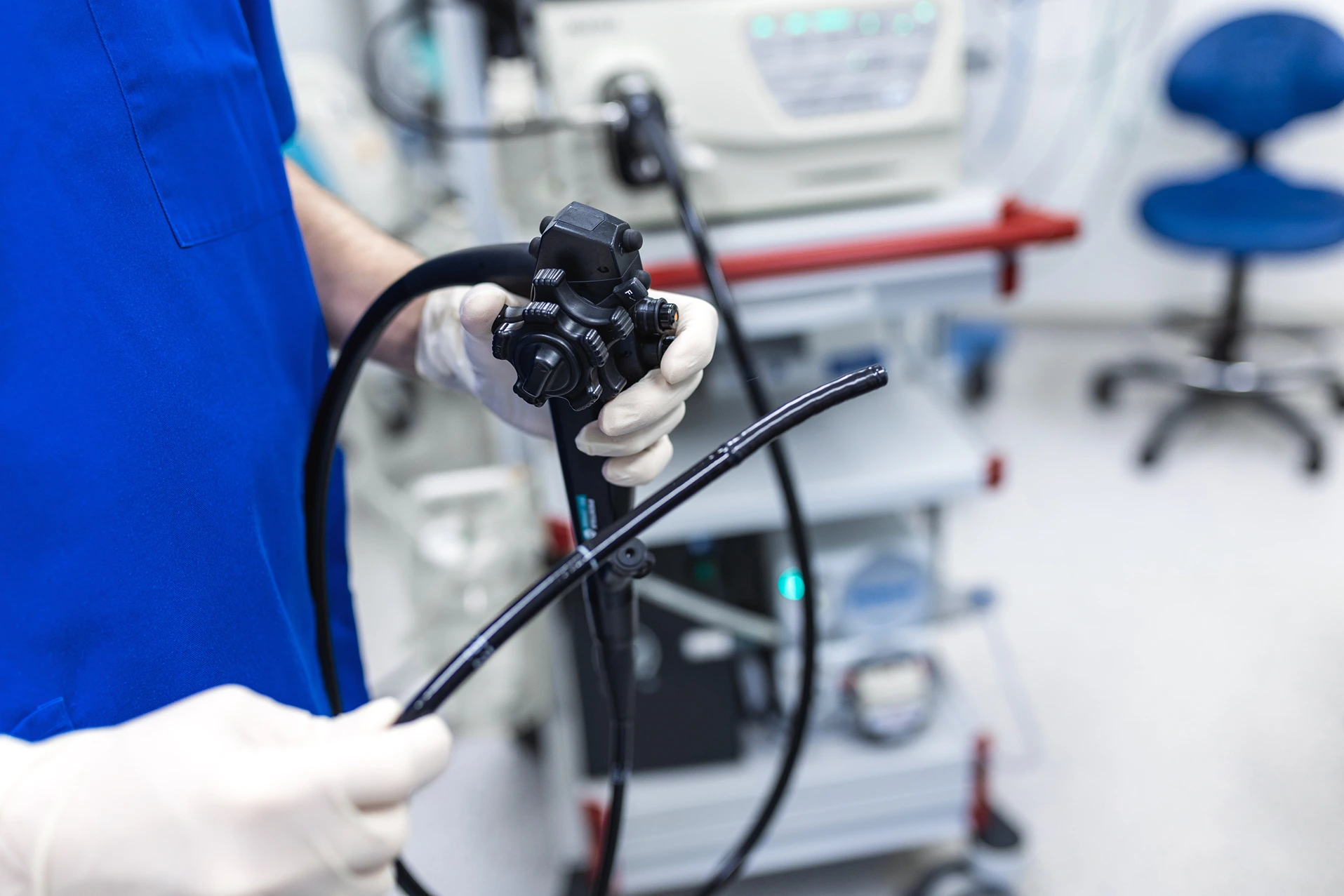
Endoscopy lets us see what is happening inside your pet’s body without making a single incision. A small, flexible camera is passed carefully into the digestive tract, airways or nasal passages, transmitting clear, real-time images to a monitor. For many conditions, this gives us information that no other investigation can provide.
What Is Veterinary Endoscopy?
An endoscope is a thin, flexible tube with a camera and a light source at its tip. It is passed carefully into the body through a natural opening, such as the mouth or nose, without any surgical incision. The camera transmits a clear, magnified view to a monitor throughout the procedure, allowing us to assess the internal surfaces of organs and structures in real time.
Instruments can be passed through a channel within the endoscope, enabling us to take biopsy samples or retrieve foreign objects during the same procedure without any additional intervention.
What Is Endoscopy Used For?
Investigating chronic digestive problems
Persistent or recurring vomiting, diarrhoea, weight loss and difficulty swallowing are all signs that something may be going on in the digestive tract. Upper gastrointestinal endoscopy allows us to examine the oesophagus, stomach and the beginning of the small intestine directly. Lower gastrointestinal endoscopy (more commonly known as colonoscopy), examines the colon and rectum.
Both allow us to take biopsy samples from the lining of the gut during the same procedure. This matters because conditions such as inflammatory bowel disease, intestinal tumours and certain types of ulceration can produce very similar symptoms but require completely different treatment. Endoscopy combined with biopsy is often the most reliable way to distinguish between them, without putting your pet through open abdominal surgery.
Removing swallowed foreign bodies
Dogs and cats swallow things they should not with surprising regularity: socks, hair ties, small toys, bones, string. Where an object is still in the stomach rather than further down the intestines, endoscopy is often the fastest and least invasive way to retrieve it, avoiding the need for abdominal surgery in many cases.
Time matters here. The longer a swallowed object remains, the greater the chance it will move further along the digestive tract where retrieval becomes significantly more complicated. If you suspect your pet has swallowed something, contact us promptly rather than waiting to see whether symptoms develop.
Investigating nasal problems
Chronic sneezing, persistent nasal discharge from one or both nostrils, nosebleeds or suspected nasal polyps can all be investigated using rhinoscopy. The endoscope is passed carefully into the nasal passages, giving us a direct view of the nasal cavity and allowing samples to be taken where needed. It can identify infections, foreign bodies, polyps and other structural abnormalities that would not be visible on an X-ray or from a physical examination alone.
Investigating respiratory problems
Where a pet has a persistent cough, unexplained breathing difficulty or a suspected inhaled foreign body, bronchoscopy allows us to view the airways and lungs directly. Samples can be taken if needed to identify infections, inflammation or other conditions affecting the respiratory tract.
What to Expect
Before the procedure, your pet will need to fast. For upper gastrointestinal endoscopy, food is typically withheld from the evening before the procedure. Water is usually permitted until the morning of admission. For colonoscopy, bowel preparation is also required in the days beforehand. We will give you clear, specific instructions when you book your appointment, as this step is important for producing images of sufficient quality to be diagnostically useful.
On the day your pet is admitted, a clinical examination and, where appropriate, pre-anaesthetic blood tests are carried out before the anaesthetic is given. A dedicated veterinary nurse monitors your pet continuously throughout the procedure.
Most endoscopic procedures are completed within thirty to sixty minutes, though more complex cases may take a little longer. Because no surgical incisions are made, recovery tends to be much faster than after open surgery. Many pets are noticeably brighter within a few hours and back to normal within a day or two. Some mild lethargy after a general anaesthetic is entirely normal.
You will receive a clear verbal summary of our findings at discharge. Where biopsy samples have been taken, laboratory results typically take five to seven working days to return. We will contact you as soon as they arrive to discuss what they mean and what we recommend next.
When to Seek Urgent Help
Some situations need prompt contact rather than a planned appointment. Get in touch without delay if your pet:
- Has swallowed an object and is showing signs of distress, repeated retching or abdominal pain
- Cannot keep food or water down
- Has developed sudden or rapidly worsening breathing difficulty
- Is showing significant bleeding from the nose, mouth or in the stools
Our registered patients have access to 24-hour emergency cover. If you are in any doubt, please call.
Why Choose Bowbridge Vets for Endoscopy?
Minimally invasive. Endoscopy allows us to investigate and, in some cases, treat problems without open surgery, meaning less discomfort and a faster recovery for your pet.
Biopsy in the same procedure. Where tissue samples are needed, we take them during the endoscopy itself. There is no need for a separate procedure.
Clear answers on the day. Visual findings are discussed with you at discharge. Biopsy results are fully explained when they return.
Part of a complete diagnostic picture. We use endoscopy when it will genuinely add to what blood tests and imaging have already told us. It sits at the end of a thoughtful diagnostic pathway.
Why Choose Bowbridge Vets For Diagnostics?
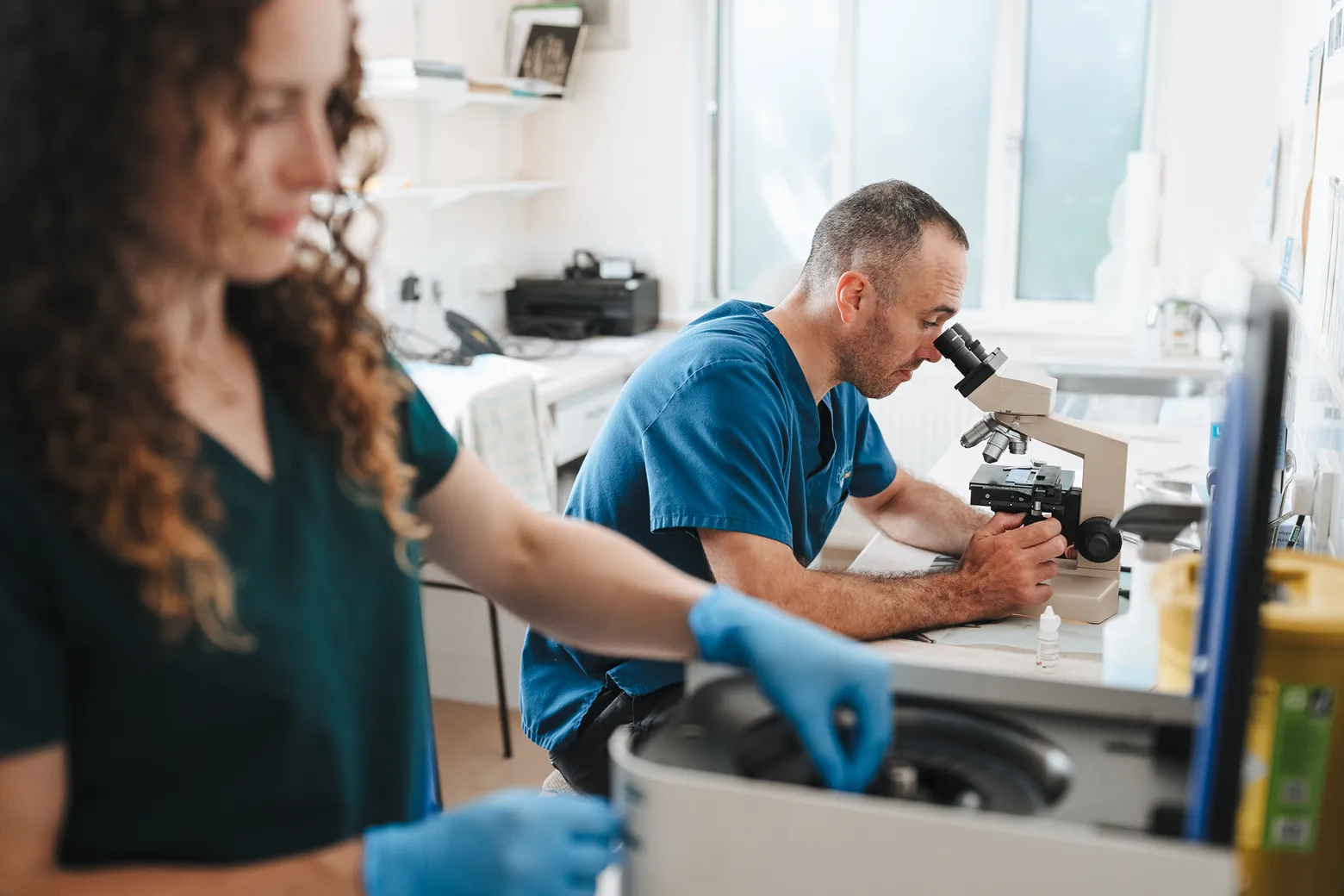
Getting to an answer quickly and accurately matters, especially when your pet is unwell. Our in-house diagnostic equipment means we can run blood tests, take X-rays and carry out ultrasound scans without sending you elsewhere. Also, results are usually available on the same day.
We explain what we find in plain English, before we discuss next steps. We recommend what is clinically appropriate for your pet’s individual situation. When we recommend a test, you will always know exactly why.
We have been caring for the pets of Stroud and Stonehouse since 1967. That experience informs not just how we practise clinically, but how we listen, how we communicate and how we think about the pets in our care.
Frequently Asked Questions
Will my pet be awake during an endoscopy?
No. All endoscopic procedures are performed under general anaesthesia. Your pet will be completely unaware of what is happening and will experience no discomfort during the procedure. A dedicated nurse monitors them throughout and your pet is closely observed during recovery before going home.
How do I prepare my pet for an endoscopy?
For upper gastrointestinal endoscopy, food should be withheld from the evening before the procedure. Water is usually fine until the morning of admission. For colonoscopy, additional bowel preparation is required in the days beforehand. We will go through this with you clearly when you book, as it varies depending on the individual patient. Please do not hesitate to call us with questions beforehand.
What conditions can endoscopy diagnose?
Endoscopy is particularly valuable for investigating the digestive tract, nasal passages and airways. It can identify inflammatory bowel disease, intestinal tumours, ulceration, polyps, foreign bodies, respiratory infections and nasal conditions, among others. Biopsy samples taken during the procedure allow us to reach a definitive diagnosis in many cases where blood tests and imaging alone have not provided a complete answer.
What is the difference between endoscopy and laparoscopy?
Both use a camera passed into the body, but the approach and purpose differ. Endoscopy uses natural openings like the mouth or nose to examine the digestive tract or airways. Laparoscopy involves small incisions in the abdominal wall to examine and operate on organs inside the abdomen, including procedures such as spaying or taking biopsy samples from the liver or other abdominal organs.
Can endoscopy remove a swallowed object without surgery?
In some cases, yes, provided the object is still in the oesophagus or stomach rather than further down the digestive tract. If an object has already moved into the intestine, surgery may be required. This is one of the reasons it is important to contact us as soon as possible if you suspect your pet has swallowed something.
How long does an endoscopy take?
Most upper gastrointestinal procedures take between thirty and sixty minutes. Colonoscopy can take a little longer. The time includes careful positioning, a thorough examination of all accessible structures and the procedure itself. We do not rush: your pet's safety and comfort and the quality of the images both depend on a steady, unhurried approach.
How quickly will I get biopsy results?
Laboratory analysis of biopsy samples typically takes five to seven working days. We will contact you as soon as the results arrive to discuss what they mean and what we recommend next. You will not be left waiting without knowing when to expect news.
Is endoscopy safe for elderly pets?
Age alone is no reason to avoid endoscopy when it is clinically the right course of action. Older pets can suffer from digestive and respiratory conditions that cause significant ongoing discomfort. So, a minimally-invasive investigation is often preferable to leaving a problem unresolved.
As with all procedures requiring anaesthesia, we carry out a thorough pre-anaesthetic assessment and take any existing health conditions into account when planning the protocol. We will discuss the individual risks and benefits with you openly before we proceed.