


.webp)
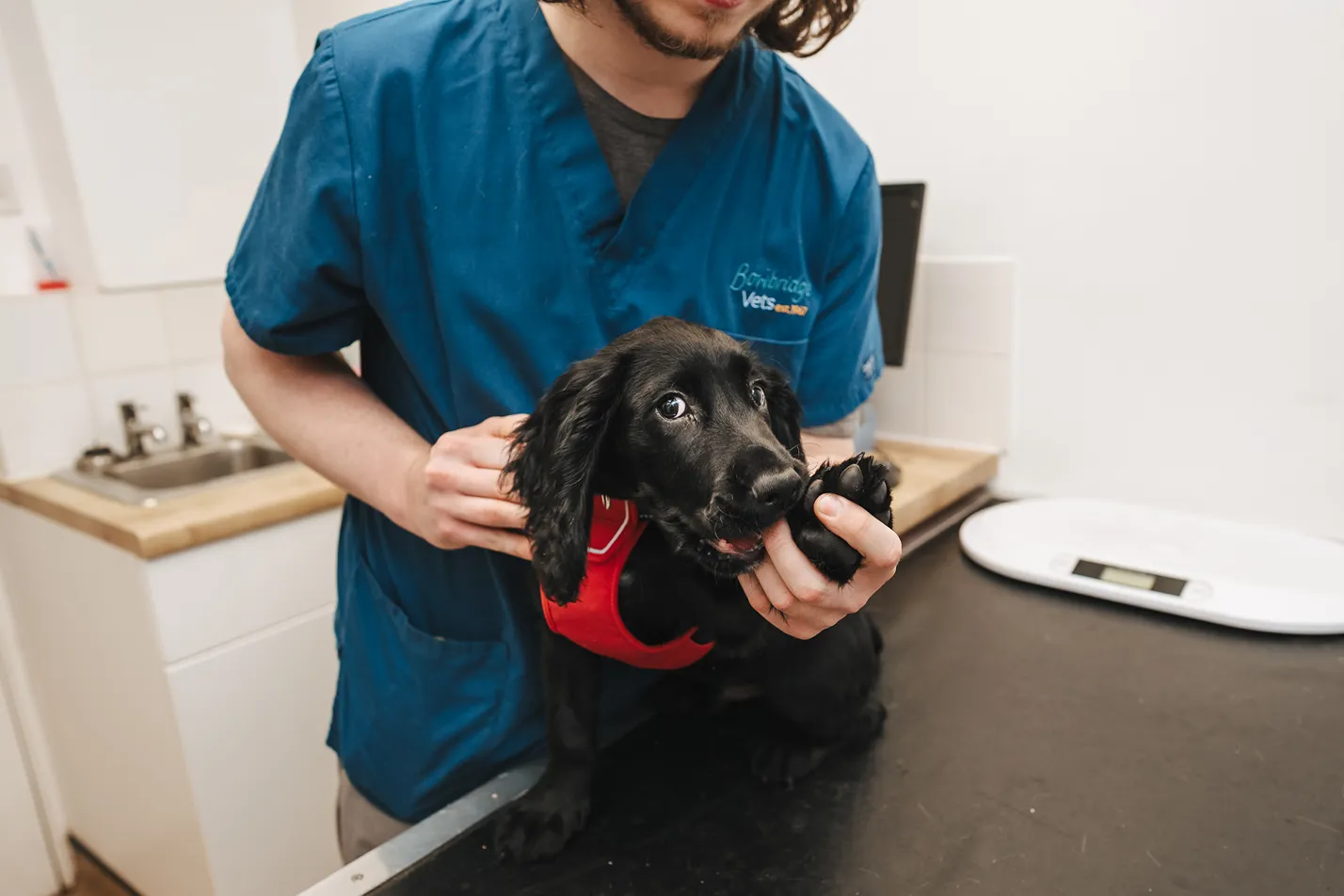
Neutering and Spaying in Stroud & Stonehouse
Pet neutering and spaying are among the most common surgical procedures we perform and, for most pets, it is one of the most beneficial things you can do for their long-term health. Alongside the obvious advantage of preventing unplanned litters, it can bring significant behavioural benefits as well as health benefits that can meaningfully extend and improve your pet's life.
Neutering male dogs
For male dogs, neutering eliminates the risk of testicular cancer and significantly reduces the risk of prostate problems later in life. It can also reduce certain behaviours driven by testosterone such as roaming and mounting. However, it is not a reliable solution for fear or anxiety related behaviours and if your dog is exhibiting these we recommend having a discussion first.
As for when to do it.... We will always discuss the timing that makes sense for your dog specifically, taking breed, size and individual circumstances into account.
Neutering male cats
For male cats, neutering reduces roaming, territorial fighting and urine spraying in the home, all of which make life more comfortable for both cat and owner. It also significantly reduces the risk of bite wound abscesses, a common consequence of fights between intact males.
The UK has a serious cat overpopulation problem and rescue centres are routinely at capacity. Neutering your male cat is one of the most practical contributions you can make to reduce that pressure.
Spaying female dogs and cats
Spaying carries some of the most significant long-term health benefits of any routine procedure we perform.
For female dogs, spaying eliminates the risk of pyometra, a serious and potentially life-threatening womb infection that is particularly affecting 25% of older intact females.
For female cats, spaying removes the hormonal cycle entirely, preventing repeated seasons that can cause distress, weight loss and behavioural changes. It eliminates the risk of unwanted pregnancies and substantially reduces the risk of reproductive cancers.
What to expect from the procedure
Neutering and spaying are performed under general anaesthesia and are routine procedures for our surgical team. Both dogs and cats are typically admitted in the morning and ready to go home the same day.
Before the procedure, we perform a clinical examination to confirm your pet is fit for surgery. For older animals or those with existing health conditions, we may recommend pre-anaesthetic bloodwork to assess organ function. We will discuss this with you when you book.
After the procedure, your pet will need a period of rest and restricted activity. We use dissolving sutures but check the surgical wound either at 2 and 10 days or 7 days after the operation. You will receive detailed written aftercare instructions and we are always available to answer questions during recovery.
Why choose Bowbridge Vets for neutering and spaying?
Neutering and spaying is something we perform regularly, but we never treat it as routine in the sense of doing it the same way for every animal. Every pet is different and the right approach depends on their species, breed, size and individual health.
- Experienced surgical team. Our experienced vets perform neutering and spaying procedures. Every case receives the same careful, considered approach.
- Honest timing advice. We will not rush you into a decision or apply a one-size-fits-all recommendation. Breed, size and individual circumstances all matter.
- Transparent costs. We will give you a clear estimate before the procedure and explain exactly what is included.
We have been caring for the pets of Stroud and Stonehouse since 1967. Honest, unhurried advice has always been central to how we work. If you have questions about neutering or spaying, including whether the time is right for your pet, please do not hesitate to get in touch.
Why Choose Bowbridge Vets?
Bowbridge Vets has been caring for the pets of Stroud and Stonehouse since 1967. Our team of RCVS-registered vets and Registered Veterinary Nurses brings decades of combined clinical experience to every appointment, from routine preventative care to complex primary care cases.
Most of our team have been with us for many decades, which means your pet is seen by people who know them, and who they know.
As an independent practice, we are not part of a corporate group. Every clinical decision is made by the vet in front of you, based entirely on what is right for your pet.
Our clients trust us with their pets year after year. That trust, built over more than half a century in this community, is something we work hard to preserve.
Frequently Asked Questions
At what age should I have my dog neutered or spayed?
The answer depends on your dog's sex, breed and size. For males, castration is commonly carried out from around six months, though larger breeds may benefit from waiting until closer to skeletal maturity, between 12 and 18 months. For females, spaying before the first season has traditionally been recommended but, again, for some larger breeds the evidence now points towards waiting. We will always discuss this based on your individual dog rather than applying a standard rule.
At what age should I have my cat neutered or spayed?
We recommend neutering and spaying cats from five months of age. Female cats can come into season from around four months old and can produce multiple litters a year if not spayed. The procedure at this age is safe and has no detrimental effect on development.
Will neutering or spaying change my pet's personality?
Not in the way many people worry about. Removing the influence of sex hormones can reduce certain hormone-driven behaviours such as roaming, mounting and urine marking. Your pet's fundamental character, their playfulness, affection and independence, will not change. If there are significant behavioural concerns, neutering or spaying alone is unlikely to be the full solution, so a broader behaviour consultation may be more helpful alongside it.
Will my pet put on weight after being neutered or spayed?
It is a risk worth being aware of. Neutered or spayed pets can have a slightly reduced metabolic rate and a greater tendency to gain weight if their diet stays exactly the same. This is manageable with appropriate adjustments to food intake, something we can advise on. Weight gain is not inevitable with the right approach.
Can I have my female dog spayed when she is in season?
We generally avoid spaying during a season. The increased blood supply to the reproductive tissues makes the procedure technically more difficult and raises the risk of complications. It is usually best to wait at least eight weeks after a season has ended. If you are unsure where your dog is in her cycle, get in touch and we can advise.
Is neutering or spaying painful?
Your pet will be under general anaesthetic throughout and will not feel pain at the time. We use appropriate analgesia during the procedure and send animals home with pain management medication. We will make sure your pet is as comfortable as possible during recovery. Most animals are back to their usual selves within a few days, though full internal healing takes a little longer.
What are the health risks of not spaying my female dog?
The most significant is pyometra, a womb infection that typically affects middle-aged to older intact females and requires emergency surgery if it develops. It is a genuinely life-threatening condition. Intact females are also at significantly higher risk of mammary tumours, with that risk increasing with each season they have.
What are the health risks of not neutering my male dog?
Testicular cancer and prostate enlargement both become more likely with age in intact males. Some intact male dogs also show behavioural issues driven by testosterone, including a tendency to roam, which brings its own risks.