

.webp)
Soft Tissue Surgery for Pets in Stroud & Stonehouse
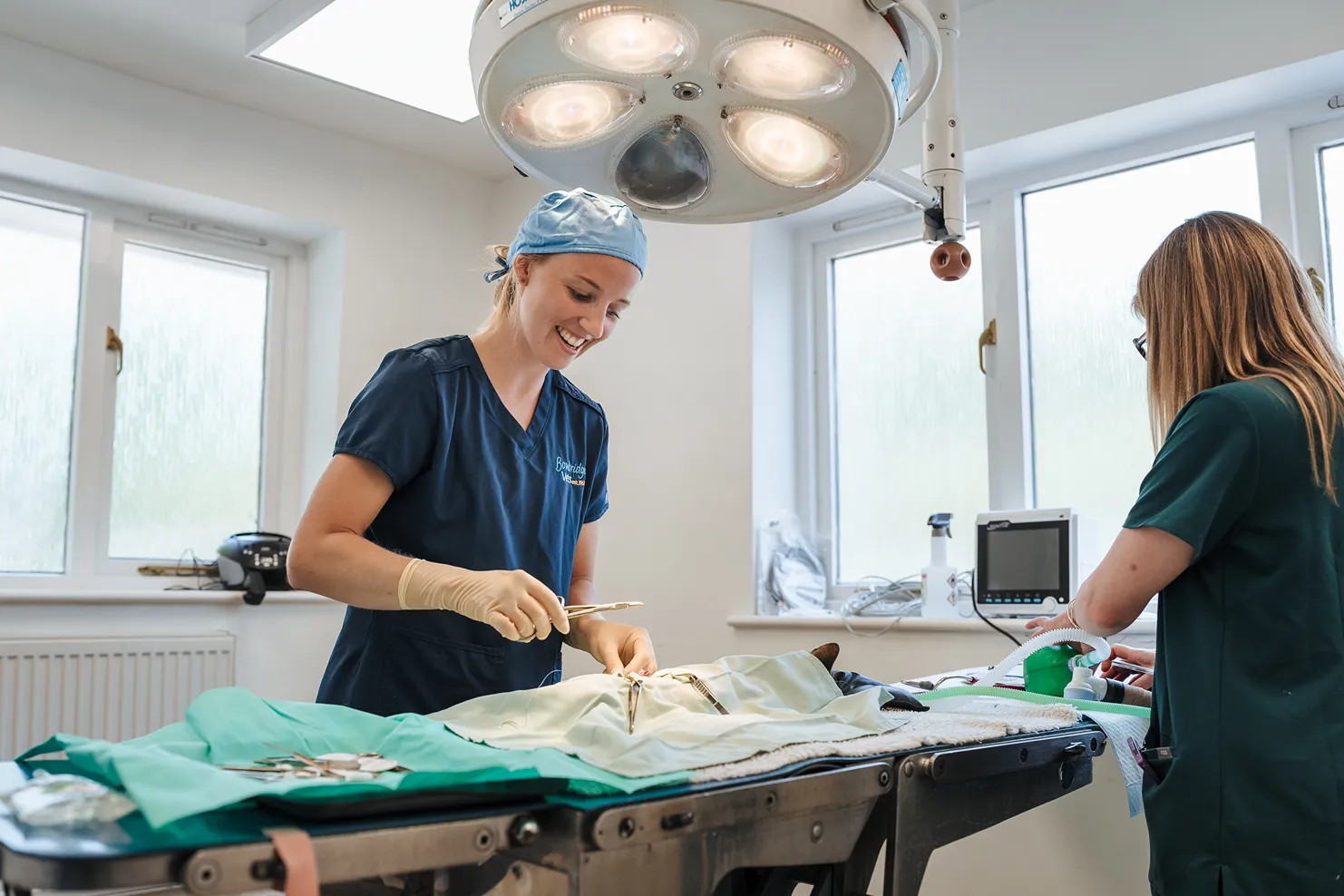
Soft tissue surgery covers everything from removing small skin lumps to more complex abdominal procedures. Whatever the treatment, we'll explain your options clearly and provide skilled, compassionate care at every stage.
What Is Soft Tissue Surgery?
If a procedure involves the skin, the organs, the digestive or urinary system, the eyes or the ears, it falls under soft tissue surgery. Dogs and cats both could need this kind of care at various points in their lives and, in some cases, rabbits and small animals do too.
The range is genuinely broad. It could be a lump that’s been growing slowly, an object swallowed at the park or a womb infection that needs urgent attention. These are all soft tissue surgical cases, handled by the same experienced team with the same careful protocols.
Procedures We Commonly Perform
Mass and lump removal
Finding a lump on your pet is worrying. It’s natural to want to know what it is and what to do about it. Not every growth needs to come off straightaway. Some warrant monitoring. Others are best removed promptly, either because of their size, their location or because there’s reason to investigate further.
When we remove a lump, we can send a sample to an external laboratory for histological analysis, which tells us exactly what the tissue is. That information shapes any further advice we give and is a simple step that makes a real difference to how we manage your pet’s care going forward.
Abdominal surgery
Abdominal surgery covers a range of procedures including the removal of bladder stones, surgery involving the spleen and procedures related to the stomach or intestines. Some of these are planned; others are prompted by a sudden change in your pet’s condition. In either case, we carry out a thorough assessment before any procedure and discuss the options with you clearly.
Gastrointestinal surgery
If your pet has swallowed something that won’t pass on its own, or if there’s a blockage in the intestines, surgery may be needed to resolve it.
If your dog shows signs of a distended, painful abdomen alongside restlessness or unproductive retching, contact us without delay. Gastric dilatation-volvulus (known as GDV or bloat) is a life-threatening emergency that requires immediate intervention.
Wound repair and reconstruction
Some wounds can’t be left to heal on their own. Deep lacerations, bite wounds and injuries that have damaged significant areas of tissue may require surgical repair, including skin flap techniques in more complex cases. We’ll assess the wound and advise on the most appropriate course of action.
Eye surgery
Certain eye conditions in dogs and cats require surgical correction. Cherry eye (caused by the prolapse of the tear gland inside the third eyelid) is one of the most commonly seen. Entropion, where the eyelid rolls inward and causes the lashes to irritate the surface of the eye, is another. Both are treatable. We’ll explain exactly what each procedure involves before we proceed.
Ear surgery
An aural haematoma is a blood blister that develops inside the ear flap, usually due to repeated head shaking or scratching. It’s more common in dogs with floppy ears and can look quite dramatic, though it isn’t as serious as it appears. Surgical drainage and repair resolves the problem effectively and allows the ear to heal properly.
There are lots of surgeries that can be performed on the ear. From stitching simple cuts and lacerations to complete removal of the ear canal in a total ear canal ablation (TECA). Some dogs get aural haematomas and if these don't respond to needle draining we sometimes need to perform surgery to repair them.
Pyometra and reproductive surgery
Pyometra is a serious womb infection that can affect unspayed female dogs and cats. It can develop quickly and become life-threatening. In most cases, emergency surgery to remove the womb is the only effective treatment.
If your dog or cat hasn’t been spayed and you notice signs of illness including increased thirst, lethargy, vomiting or an unusual discharge, please contact us promptly. It may not be pyometra, but it’s always worth ruling it out. The earlier it’s caught, the better the outcome.
Learn more about neutering and spaying
Our Surgical Approach
Good surgical care doesn’t start in the operating theatre. It starts with the conversation before it.
Pre-operative discussion and consent
Before any procedure is booked, we will sit down with you and go through what we’re recommending and why. That means explaining what the surgery involves, what the risks are, what recovery looks like and what it’s going to cost, all before we ask you to sign a consent form.
Pre-anaesthetic health assessment
On the day of surgery, every patient is given a thorough examination before any anaesthetic is given. We’re assessing heart and lung function, overall condition and anything that might affect how your pet responds to the anaesthetic drugs.
For older pets or those with existing health conditions, we recommend pre-anaesthetic blood tests. These check the function of the kidneys and liver, the two organs most involved in processing anaesthetic drugs. If there’s something we need to factor in, we’d far rather know about it before the procedure than discover it during.
Anaesthesia and monitoring
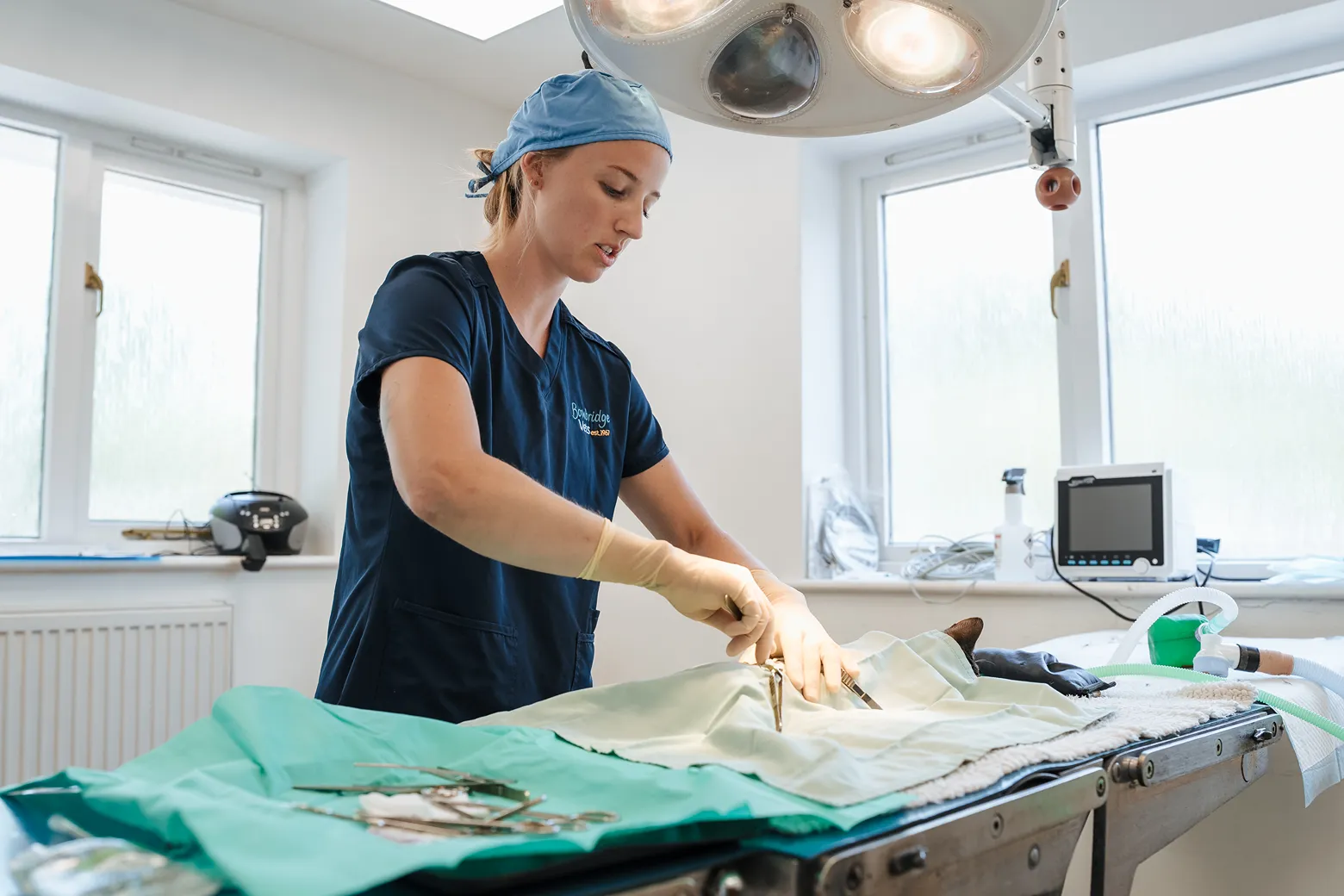
Throughout every procedure, a dedicated veterinary nurse monitors your pet continuously, from the moment anaesthesia is induced until your pet has safely recovered.
We understand that the word ‘anaesthetic’ can feel alarming. No anaesthetic is entirely without risk, however we have designed our protocols to minimise that risk at every stage.
Pain management
Pain management begins before the procedure and continues into recovery. Your pet will go home with appropriate analgesia and clear instructions on how to administer it. We’ll also tell you what to watch for and when to get back in touch if something doesn’t seem right.
Post-operative care and follow-up
You’ll leave with clear aftercare instructions specific to your pet’s procedure. Most patients have a follow-up appointment at around seven days for a wound check, though some procedures use dissolving sutures that don’t require removal. We’re available throughout your pet's recovery to answer any questions you may have.
When Is Soft Tissue Surgery Urgent?
Some soft tissue conditions can’t wait. If your pet shows any of the following, contact us as soon as possible:
- Sudden abdominal swelling or signs of significant pain
- Inability to urinate or pass stools
- Vomiting or a suspected swallowed object
- A wound that is deep, won’t stop bleeding or is showing signs of infection
- An unspayed female dog or cat that becomes suddenly unwell
Our registered patients have access to out-of-hours emergency cover. If your pet needs emergency veterinary care, we're here whenever you need us, either at our practice during opening hours, or at the emergency out-of-hours service at Wood Veterinary Hospital.
Why Choose Bowbridge Vets For Surgery?
Thinking about surgery for your pet is never easy. What we can offer is a straightforward approach and a team that takes the time to explain things properly.
Every surgical patient at Bowbridge Vets receives a full pre-operative assessment before anything proceeds. A dedicated veterinary nurse monitors every patient throughout their procedure. And, when you collect your pet, you leave with clear aftercare instructions and the confidence that we’re here if questions come up during recovery.
We’re an independent practice. That matters to us, because it means clinical decisions are made by the vet in front of you, based on your pet’s needs alone. When referral to a specialist is in your pet’s best interest, we will say so clearly and help you get there.
Frequently Asked Questions
What is soft tissue surgery, how is it different from orthopaedic surgery?
Soft tissue surgery covers procedures involving the skin, organs, digestive system, eyes and ears. Orthopaedic surgery deals specifically with bones, joints, ligaments and tendons. Some pets need both at different points in their lives. Some procedures, like certain wound repairs, sit on the boundary between the two.
My pet has a lump. Does it always need to come off?
Not necessarily. Some lumps can be safely monitored over time, especially if they're small, unchanged and not bothering your pet. Others are better removed sooner, either because they're changing, causing concern, or because we need a definitive diagnosis. We'll assess the lump carefully, discuss our findings with you and help you decide on the best course of action.
My dog swallowed something. Does it need surgery?
Not always. Depending on what was swallowed and how long ago, it may be possible to manage the situation without surgery. Some objects pass through without causing harm; others are more likely to cause a blockage. If you know or suspect your pet has swallowed something, contact us straightaway and we'll advise based on the specific situation. Do not wait to see if symptoms develop. Early action gives us more options.
What is a pyometra and how serious is it?
Pyometra is a serious infection of the womb, affecting unspayed female dogs and cats. It can develop rapidly and, without treatment, becomes life-threatening. In most cases, the treatment is emergency surgery to remove the womb. If your unspayed female pet becomes suddenly unwell, particularly if she's middle-aged or older, contact us without delay.
How do I prepare my pet for surgery?
We'll give you specific instructions when you book your appointment. In most cases, this means withholding food from the night before, although water is usually fine until the morning of the procedure. When you arrive, let us know about any medications your pet is on and bring any relevant medical history if this is your pet's first visit to us. If you have questions before the day, just call and we'll talk you through it.
How long does recovery from soft tissue surgery take?
It varies depending on the procedure. A straightforward lump removal might need just a week of rest and a wound check in ten days. More complex abdominal surgery typically requires a longer period of restricted activity. We'll give you a realistic picture of what recovery looks like for your pet's specific procedure at discharge.
Will my pet need to wear a buster collar after surgery?
In many cases, yes. A buster collar stops your pet from licking or chewing at a wound or suture site, which is one of the most common causes of post-operative complications and for some wounds a body suit can be a suitable alternative.
We know they're not always popular with pets or owners, but they do make a genuine difference to healing. There are softer, more comfortable alternatives to the traditional rigid cone, but often these are not sufficient to stop them reaching extremities like legs and tails. We are happy to discuss the options at discharge.
Is pet surgery covered by pet insurance?
It depends on your policy. Many policies do cover surgical procedures, subject to excesses and exclusions, particularly for conditions that aren't pre-existing. It's always worth checking your policy documents or speaking to your insurer before the procedure.