


.webp)
Pet Vaccinations in Stroud & Stonehouse
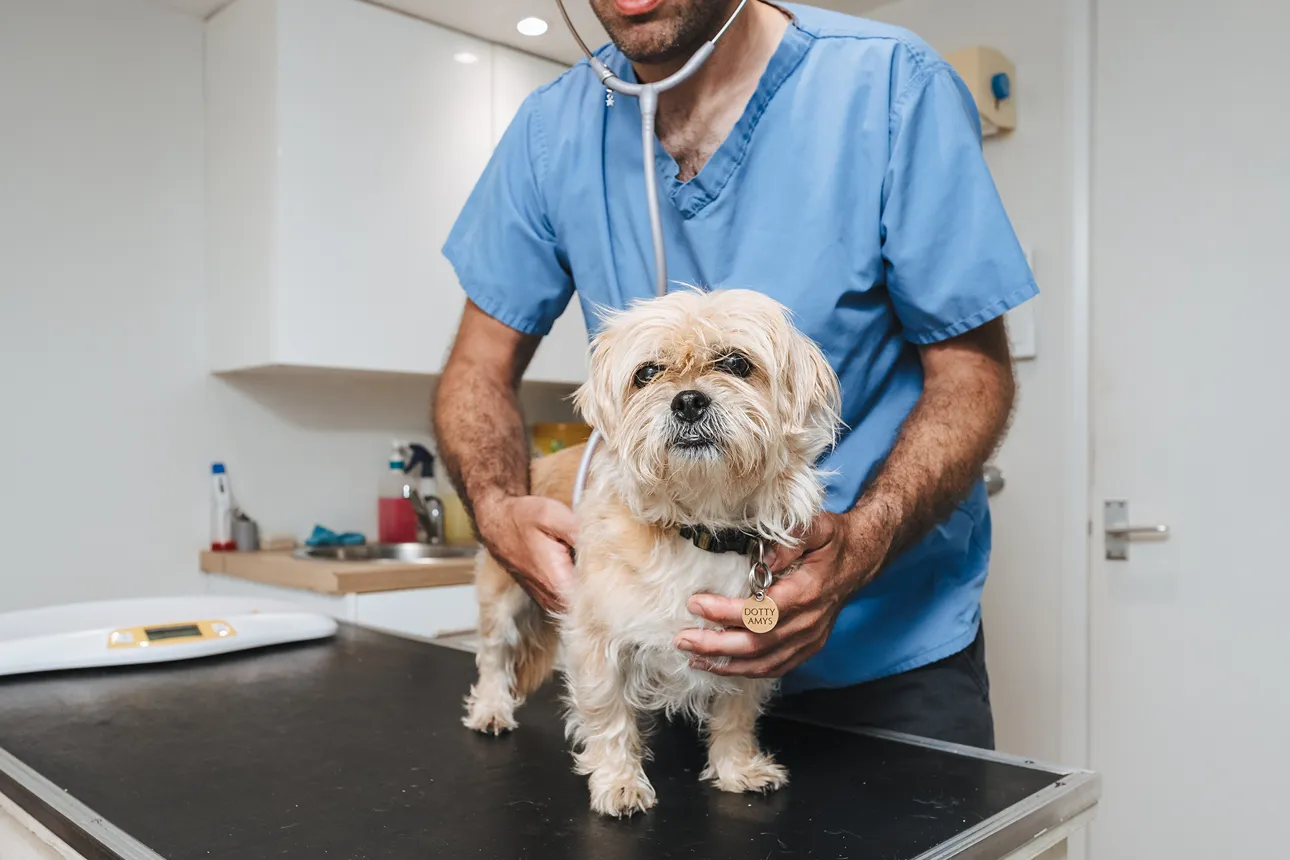
Vaccinations are one of the simplest ways to protect your pet from serious, preventable diseases. Every vaccination appointment includes a full health check by one of our experienced vets, giving you peace of mind that your pet is healthy as well as protected.
Why vaccination matters
The diseases that routine vaccines protect against are still present in the UK. Parvovirus, for example, is highly contagious, potentially fatal and can survive in soil for years.
Vaccinations also work cumulatively to protect more pets than just yours. When enough pets in a community are vaccinated, it becomes much harder for infectious diseases to take hold and spread, which matters particularly to pets who cannot be vaccinated for health reasons, the very young, or those with certain medical conditions.
Some boarding kennels and catteries also require up-to-date vaccination records before accepting a pet. So, as well as the obvious health benefits, being vaccinated keeps options open when you need to make alternative arrangements.
What do we vaccinate dogs against?
The core vaccinations for dogs in the UK protect against:
- Distemper: A highly contagious viral disease that can affect the respiratory and digestive systems and, in serious cases, the nervous system. It is often fatal.
- Leptospirosis: A bacterial disease that is often fatal and is zoonotic, meaning it can affect humans. It is often carried by rats and transmitted through contaminated water.
- Hepatitis (Types 1 & 2): Caused by canine adenovirus, this can affect the liver, eyes and respiratory tract. It is also associated with kennel cough.
- Parainfluenza: This highly-contagious virus contributes to kennel cough and upper respiratory infections.
- Parvovirus: A potentially fatal virus that attacks the gut lining, causing severe vomiting and diarrhoea which can lead to life-threatening dehydration.
Most puppies receive their primary course as two injections, typically starting from around eight weeks of age and given four weeks apart.
These are generally boosted annually, though some components run on a three-year cycle. We'll always let you know which boosters your dog is due for and why.
We also offer vaccination against kennel cough, which is delivered as drops into the nose or mouth rather than an injection. Kennel cough is highly contagious and causes a distressing, persistent cough.
This vaccination is typically required by kennels, but it is worth considering even if your dog is not boarded, as it can be picked up anywhere dogs gather.
What do we vaccinate cats against?
Core feline vaccines in the UK protect against:
- Cat flu: Two viruses cause cat flu, we vaccinate against both. Young kittens, elderly cats and those with compromised immune systems are most vulnerable to serious illness.
- Feline parvovirus: A robust and highly resilient virus that can cause serious, even fatal disease, particularly in kittens. Importantly, both indoor and outdoor cats are at risk as the virus can be carried into the home on shoes, clothing or hands.
- Feline infectious enteritis (FIE): This severe gut infection is caused by feline parvovirus.
- Feline leukaemia virus (FeLV): FeLV is a lifelong infection and most affected cats succumb to secondary diseases (such as lymphoma or anaemia) within three years of diagnosis. Infection requires direct contact between cats, most commonly through saliva or bite wounds.
Some cats may benefit from additional protection beyond the core schedule. Also, a rabies vaccination is required for any cat travelling internationally. We will advise on whether additional protection is relevant for your cat.
Kittens typically receive their primary course at around nine weeks and twelve weeks of age. Annual boosters help maintain protection throughout your cat's life, though the exact schedule can vary depending on your cat's lifestyle and the vaccines used.
If you are unsure when your cat last had a booster, or you have adopted a cat whose history is unknown, do not worry. We can advise on how best to get their protection up to date.
Do we vaccinate rabbits?
Yes. Rabbits in the UK are routinely vaccinated against myxomatosis and two strains of rabbit haemorrhagic disease (RVHD1 and RVHD2). Both conditions are serious, often fatal and can be contracted even by house rabbits through contact with wild rabbits, insects or contaminated hay.
Annual vaccination is recommended for both and we will make sure your rabbit's schedule is straightforward and easy to keep up with.
Why have your pet vaccinated at Bowbridge Vets?
• A vaccination is a health check too. Our vets use every vaccination appointment as an opportunity to examine your pet from nose to tail. It is one of the most valuable preventative health
opportunities available.
• Honest advice about what your pet actually needs. Not every pet needs every vaccine. We will talk you through what is appropriate based on their age, lifestyle and history.
• Independent practice, no targets. We are not driven by corporate protocols or upselling objectives. If your pet is up to date, we will tell you.
• Almost 60 years of community care. We have been vaccinating Stroud and Stonehouse pets since 1967. That experience shows.
Why Choose Bowbridge Vets?
Bowbridge Vets has been caring for the pets of Stroud and Stonehouse since 1967. Our team of RCVS-registered vets and Registered Veterinary Nurses brings decades of combined clinical experience to every appointment, from routine preventative care to complex primary care cases.
Most of our team have been with us for many decades, which means your pet is seen by people who know them, and who they know.
As an independent practice, we are not part of a corporate group. Every clinical decision is made by the vet in front of you, based entirely on what is right for your pet.
Our clients trust us with their pets year after year. That trust, built over more than half a century in this community, is something we work hard to preserve.
Frequently Asked Questions
My puppy has had their first vaccination but not their second. Can they go outside?
After the first vaccination, some protection begins to develop, but it is not fully established until the second injection and a waiting period of one to two weeks afterwards. Until then, it is best to avoid areas where unvaccinated dogs may have been, such as public parks and pavements. Your puppy can still visit the gardens of vaccinated dogs and can be carried in lower-risk areas. Socialisation during this period remains important for development, so the aim is to manage risk rather than stay at home completely. We are happy to advise on this at your puppy's first appointment.
How long does a vaccination appointment take?
Usually around 10 minutes. The vaccination itself takes just a few seconds, but we always take time to give your pet a thorough health check and to answer any questions you have. If you have specific concerns, just mention them when you book and we can allow a little extra time.
My pet has had a reaction to a vaccine before. Should I still vaccinate?
Mild reactions, a little soreness at the injection site or slight lethargy on the day, are not uncommon and are not usually a reason to stop vaccinating. Serious allergic reactions are rare but do occur. If your pet has had any previous reaction, let us know before the appointment so we can advise whether any precautions are needed. In most cases, vaccination is still the right decision, but we will always take your pet's individual history into account.
What if my pet misses a booster?
If a booster is missed, the course may need to be restarted depending on how long it has been. The sooner a missed booster is caught, the better. If you are unsure when your pet was last vaccinated, bring them in and we can advise on the most appropriate course of action.
Can I vaccinate my pet at any age?
Yes, older pets can and should be vaccinated. There is sometimes a misconception that vaccination is only for young pets. Adult and senior pets remain susceptible to the diseases we vaccinate against. If you have an older pet who has never been vaccinated, or whose records are significantly out of date, please do not hesitate to get in touch.
Are there any pets who cannot be vaccinated?
Some pets may not be suitable for certain vaccines at certain times, for example, those who are on immunosuppressive medication. This is another reason why the health check before vaccination matters. We will always assess your pet before administering anything and will advise if there is a reason to delay or adjust the schedule.
Does my indoor cat need to be vaccinated?
Yes. Indoor cats are at lower risk than outdoor cats, but they are not risk-free. Cat flu viruses can be carried into the home on clothing or shoes. The feline leukaemia component is sometimes offered selectively based on risk, something we can discuss at the appointment. Our advice will always be based on your cat's actual circumstances, not a blanket protocol.
My dog was vaccinated abroad. Are those vaccines valid in the UK?
It depends on which vaccines were used and whether they are licensed in the UK. Some vaccines administered in other countries are not considered equivalent to those licensed here. If you have adopted or imported a pet, bring their documentation along and we can advise on whether any vaccines need to be repeated or topped up.