

.webp)
The Five Grass Seed Cases We See Most Often In Summer
Learn the five most common grass seed cases our vets see every summer in Stroud & Stonehouse, plus the symptoms every dog owner should know. Read now.
Every summer, we notice the same pattern. A dog arrives at one of our practices in Stroud or Stonehouse with symptoms that seem completely unrelated to the patient before them.
One is limping. Another won't stop sneezing. The next keeps shaking their head or constantly licking one paw.
Although the symptoms are very different, the cause is often exactly the same.
Grass seeds don't always present in obvious ways, which is why they're so easily mistaken for a sprain, an allergy or a minor irritation.
Knowing what to look for could help your dog receive treatment before a small problem becomes something much more serious.
In this blog we’ll cover:
- Five common grass seed cases we see every summer
- Why do grass seeds cause so much trouble?
- Why dogs around Stroud and Stonehouse are more at risk
- A five-minute grass seed check after every walk
Five common grass seed cases we see every summer
At Bowbridge Veterinary Group, every year we seem to see more dogs affected by grass seeds.
That's why we're passionate about raising awareness. Grass seeds may be small, but they can cause significant pain and, if left untreated, lead to much more serious problems.
By recognising the signs early, owners can help their dogs get the treatment they need before complications develop.
- “We thought she'd just pulled a muscle"
Maisie, a young Cockapoo, returned from a walk around Rodborough Common slightly lame.
Her owners assumed she'd overdone it chasing a ball.
By the next morning, she was constantly licking one paw.
On examination, a grass seed had lodged between two toes. It had already begun travelling beneath the skin, creating inflammation.
The takeaway: Sudden limping after a summer walk isn't always a sprain.
- "He sneezed for hours"
Charlie, a Labrador, couldn't stop sneezing after running through long grass near Woodchester Park.
His owners suspected pollen.
The sneezing became more frequent and one nostril began bleeding slightly.
A grass seed was found lodged within the nasal passage.
The takeaway: Persistent sneezing after a walk isn't something to ignore.
- "He screamed every time he shook his head"
Oscar's owners noticed he was repeatedly shaking his head and scratching at one ear after an evening walk near Stonehouse.
The discomfort didn't settle, and he became increasingly distressed whenever he moved his head.
Further examination revealed a grass seed lodged deep within the ear canal.
The takeaway: If your dog suddenly starts shaking their head or scratching at one ear after a walk, it's always worth having them examined promptly. Early treatment can prevent a simple grass seed from becoming a much more painful problem.
- "The lump kept coming back"
Luna's owners noticed a small swelling on her leg several weeks after a countryside walk.
The swelling burst, healed, then returned.
Further investigation revealed a migrating grass seed hidden beneath the skin.
Grass seeds move forwards rather than backwards so they can travel surprising distances before eventually causing an abscess.
The takeaway: Recurring lumps or draining wounds during the summer can sometimes
- "She wouldn't open one eye"
Bella arrived holding one eye tightly closed after exploring long grass.
A grass seed had become trapped beneath her eyelid and was scratching the surface of the eye every time she blinked.
Without prompt treatment, injuries like this can lead to painful ulcers and permanent scarring.
The takeaway: Eye problems after walks should always be treated as urgent.
Why do grass seeds cause so much trouble?
Grass seeds are incredibly small, which is exactly why they're often underestimated.
Their barbed shape allows them to keep moving deeper into tissue with every movement your dog makes.
That's why what looks like a minor limp one day can become an abscess requiring surgery a few days later.
What makes dogs around Stroud and Stonehouse more at risk?
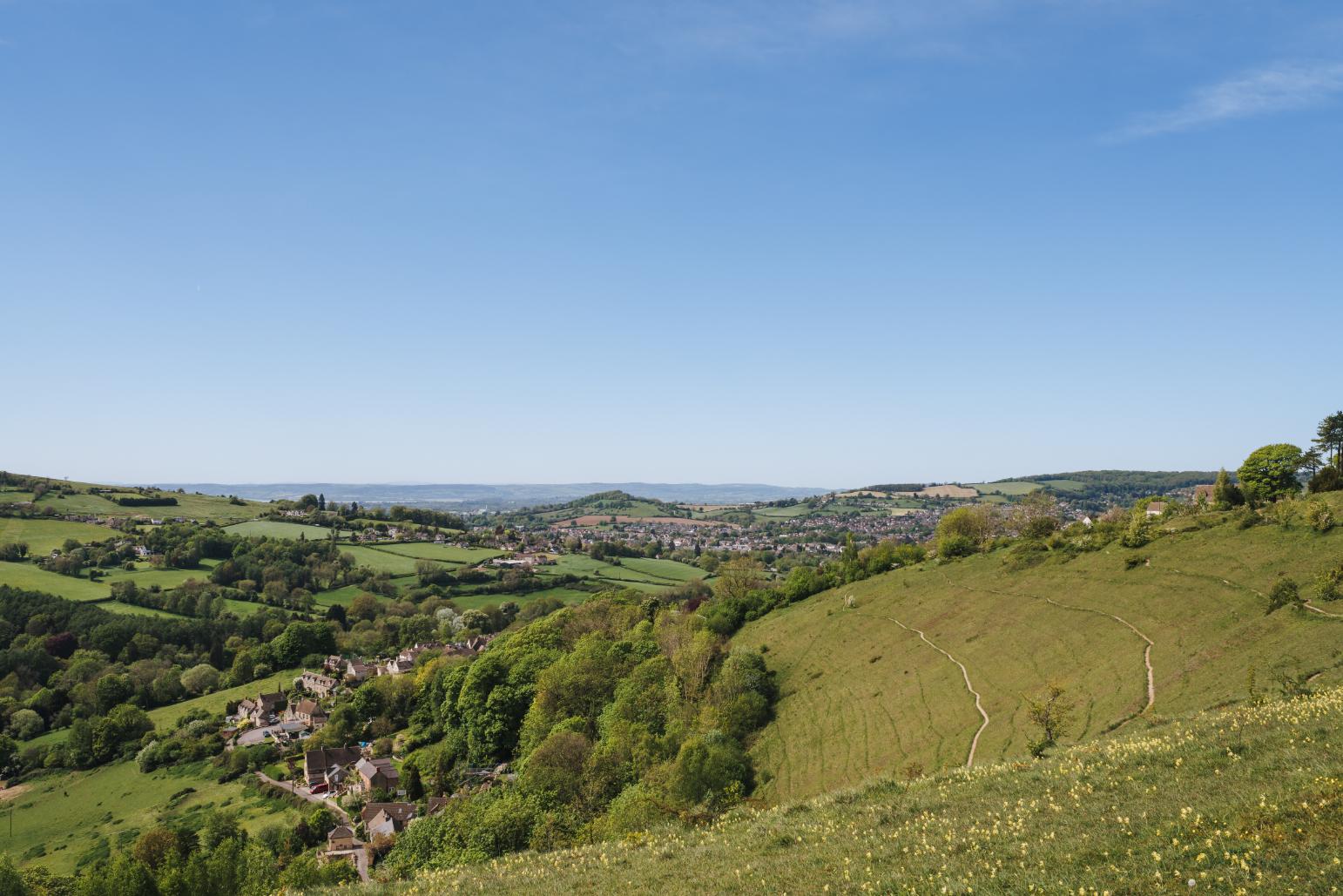
We're fortunate to have beautiful countryside right on our doorstep. Areas such as Rodborough Common, Selsley Common, Minchinhampton Common and many local footpaths are fantastic places to exercise dogs, particularly during the warmer months.
It's these long grasses that make our dog walks so picturesque but can also increase the risk of grass seed injuries.
That doesn't mean you should avoid these areas. It simply means it's worth getting into the habit of checking your dog over after every walk.
Five minutes that could save your dog a lot of discomfort
When you get home from your dog walk:
- Check between each toe
- Look around the ears
- Brush through feathered coats
- Check around the eyes
- Watch for unusual sneezing, limping or head shaking (over 24 hours)
The sooner a grass seed is found, the easier it usually is to remove.
Worried your dog has picked up a grass seed?
If your dog develops a sudden limp, repeated sneezing, persistent paw licking or starts shaking their head after a walk, don't assume it will settle on its own.
Our veterinary teams in Stroud and Stonehouse see grass seed injuries every summer and can assess your dog, locate the cause and advise on the most appropriate treatment.
Sometimes it really is "only a limp". But sometimes, it's a grass seed that needs attention before it causes something much more serious. Get in touch with our team today.